

GlideX, a cross-device workspace, facilitates seamless screen sharing and file transfer, mirroring the collaborative spirit found within detailed analytic geometry PDF resources.
What is Analytic Geometry?
Analytic geometry bridges the gap between algebra and geometry, utilizing coordinate systems – like the Cartesian plane – to represent geometric shapes with algebraic equations. This allows for the systematic study of shapes through formulas and calculations. Think of it as translating visual forms into quantifiable data, and vice versa.
PDF resources become invaluable here, offering structured explanations of concepts like lines, conic sections (circles, ellipses, parabolas, hyperbolas), and transformations. GlideX, while a connectivity tool, exemplifies the modern need for accessible information, much like readily available analytic geometry PDFs. These documents often contain detailed diagrams, step-by-step solutions, and practice problems, aiding comprehension. They provide a portable and searchable format for learning, allowing students and enthusiasts to explore the subject at their own pace;

The Importance of PDF Resources
Analytic geometry PDFs offer unparalleled accessibility and convenience for learners. Unlike traditional textbooks, they are easily downloadable, searchable, and portable – mirroring the instant connectivity offered by tools like GlideX for sharing information. This digital format allows students to study on various devices, anytime, anywhere.
Furthermore, PDFs often contain interactive elements, embedded diagrams, and solved examples, enhancing understanding. They frequently consolidate information from multiple sources, providing a comprehensive overview of topics. The ability to annotate PDFs directly – highlighting key concepts and adding personal notes – fosters active learning. Just as GlideX streamlines device interaction, well-crafted PDFs streamline the learning process, making complex concepts more approachable and digestible for students mastering analytic geometry.

Coordinate Systems and Lines
GlideX’s screen mirroring capabilities echo the visual clarity needed when studying coordinate systems and lines within comprehensive analytic geometry PDF guides.
Cartesian Coordinate System in PDFs
Understanding the Cartesian coordinate system is foundational to analytic geometry, and PDFs offer a structured way to grasp this concept. Just as GlideX connects devices to create a unified workspace, PDFs consolidate essential information about axes, quadrants, and plotting points. These resources frequently include diagrams and examples, mirroring GlideX’s visual approach to screen sharing.
PDF guides often detail how to represent points and equations graphically, aiding in visualization. They provide step-by-step explanations, similar to the seamless connectivity GlideX offers between devices. The ability to download and access these PDFs offline, much like GlideX’s potential for USB connection, ensures learning isn’t limited by internet access. Furthermore, PDFs allow for annotation and highlighting, fostering active learning, while GlideX facilitates quick file transfers for collaborative study.
Slope-Intercept Form and PDFs
PDF resources excel at breaking down the slope-intercept form (y = mx + b) of a linear equation, a core concept in analytic geometry. Similar to how GlideX streamlines device connectivity, PDFs present this form in a clear, organized manner, detailing the significance of ‘m’ (slope) and ‘b’ (y-intercept). They often include worked examples, demonstrating how to identify these values from equations and graphs.
These PDFs frequently showcase how to graph lines using the slope-intercept form, mirroring GlideX’s screen mirroring capabilities for visual clarity. The downloadable nature of PDFs, akin to GlideX’s offline functionality, allows for convenient study. Moreover, PDFs often contain practice problems with solutions, enabling self-assessment, just as GlideX supports seamless file transfer for collaborative problem-solving. The ability to annotate PDFs enhances understanding, fostering a deeper grasp of this fundamental equation.
Distance Formula and its PDF Representation
Analytic geometry PDFs effectively illustrate the distance formula, derived from the Pythagorean theorem, for calculating the distance between two points in a coordinate plane. Much like GlideX connects devices, the distance formula connects points. These PDFs typically present the formula – √((x₂ ⸺ x₁)² + (y₂ ⸺ y₁)² ) – alongside step-by-step examples, mirroring GlideX’s user-friendly interface.
PDFs often demonstrate applications of the distance formula, such as finding the radius of a circle or verifying if a triangle is equilateral, similar to GlideX’s multi-device workspace. Downloadable PDFs offer portability, enabling study anywhere, much like GlideX’s cross-platform compatibility. Practice problems within these resources reinforce understanding, and the ability to annotate PDFs allows for personalized learning. The clear visual presentation in PDFs aids comprehension, mirroring GlideX’s screen extension features.

Conic Sections: A PDF Focus
GlideX’s seamless connectivity parallels how PDFs consolidate conic section knowledge – circles, ellipses, parabolas, and hyperbolas – into a unified, accessible learning resource.
Circles: Equations and Properties in PDF Format
GlideX, enabling screen mirroring and extension, mirrors the way PDF guides expand understanding of circle equations – (x-h)² + (y-k)² = r² – and their properties.
PDFs offer detailed explorations of the center (h, k), radius (r), diameter, circumference, and area calculations. They visually demonstrate how altering these parameters shifts the circle’s position and size.
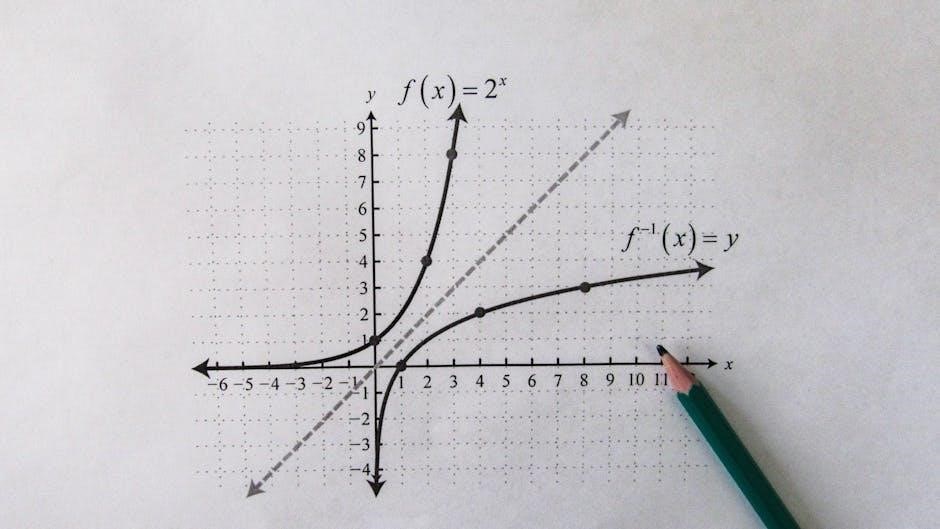
Furthermore, PDFs often include solved examples illustrating how to determine a circle’s equation given specific conditions, like three points on its circumference or its center and a point on it. Interactive PDFs may even contain practice problems with solutions for self-assessment, much like GlideX’s unified workspace fosters interactive collaboration.
The clarity of PDF formatting aids in grasping concepts like tangents, chords, and arcs, essential for mastering circle geometry.
Ellipses: Detailed Explanations in PDF Guides
Similar to GlideX’s ability to connect devices for a unified workspace, PDF guides connect complex concepts of ellipses into a cohesive understanding. These guides thoroughly explain the standard equation: (x-h)²/a² + (y-k)²/b² = 1, detailing the roles of the center (h, k), major axis (2a), and minor axis (2b).
PDFs visually illustrate how ‘a’ and ‘b’ affect the ellipse’s shape – whether it’s wider or taller – and its orientation. They break down eccentricity (e) and its relation to the foci, providing step-by-step calculations.
Detailed examples demonstrate finding the equation given foci and vertices, or vice versa. Interactive PDFs often include exercises, mirroring GlideX’s interactive features, allowing students to practice and solidify their knowledge of elliptical properties.

PDFs clarify concepts like directrices and latus rectum, crucial for a complete grasp of ellipse geometry.
Parabolas: Understanding the Concepts via PDF
Just as GlideX seamlessly extends your workspace, PDF guides extend your understanding of parabolas. They begin with the standard equation: y = ax² + bx + c or x = ay² + by + c, explaining how ‘a’ dictates the parabola’s opening direction and width. Detailed PDFs illustrate the vertex, focus, and directrix, crucial elements defining a parabola’s shape.
These resources break down finding the vertex using -b/2a, and calculating the focus and directrix based on ‘a’ and the vertex coordinates. Step-by-step examples demonstrate converting equations to vertex form, simplifying analysis.
PDFs often include graphical representations, mirroring GlideX’s visual clarity, showing how changing coefficients alters the parabola’s curve. Interactive PDFs provide practice problems, reinforcing concepts like axis of symmetry and focal length.
Advanced PDFs cover applications, like projectile motion, demonstrating real-world relevance.
Hyperbolas: PDF Resources for Mastery
Similar to GlideX connecting multiple devices, PDF resources connect disparate concepts to master hyperbolas. They start with the standard equation: (x²/a²) ⸺ (y²/b²) = 1 or (y²/a²) ⸺ (x²/b²) = 1, explaining how ‘a’ and ‘b’ define the transverse and conjugate axes.

PDFs meticulously detail finding the vertices, foci, and asymptotes – lines the hyperbola approaches but never touches. They demonstrate calculating eccentricity, a measure of how ‘stretched’ the hyperbola is.
Step-by-step examples guide you through completing the square to rewrite equations in standard form, simplifying analysis. Visual aids, akin to GlideX’s screen mirroring, illustrate the hyperbola’s branches and their relationship to the asymptotes.
Advanced PDFs explore rectangular hyperbolas and their unique properties, alongside practical applications.

Transformations and PDFs
GlideX’s screen extension mirrors how PDFs visually demonstrate translations, rotations, and reflections, altering geometric shapes while preserving key analytic geometry properties.
Translations, Rotations, and Reflections in PDF Examples
GlideX, enabling seamless device connectivity, exemplifies how analytic geometry concepts are readily visualized and applied across platforms. PDF resources showcasing transformations – translations shifting figures, rotations turning them around a point, and reflections mirroring them – become incredibly accessible. These PDFs often utilize coordinate systems, mirroring GlideX’s screen mirroring capabilities, to demonstrate how points change under each transformation.
Detailed examples within these PDFs illustrate the algebraic rules governing these changes, allowing students to practice applying formulas and understanding the impact on equations. The ability to share screens via GlideX facilitates collaborative problem-solving using these PDF examples, enhancing comprehension. Furthermore, the visual nature of PDFs complements the practical application offered by tools like GlideX, solidifying the understanding of geometric manipulations.
Scaling and Shearing: Visual Aids in PDF Documents
Similar to GlideX’s ability to extend screen space, scaling and shearing transformations in analytic geometry alter the size and shape of figures. PDF documents excel at visually demonstrating these concepts, often employing coordinate grids to illustrate how points are affected. Scaling, enlarging or shrinking a shape, is clearly depicted, while shearing, which skews the figure, is explained with accompanying diagrams.
These PDFs frequently include step-by-step examples, mirroring the ease of use found in GlideX’s interface. The ability to quickly transfer files via GlideX allows for easy sharing of these visual aids. Understanding the matrix representations of these transformations, often detailed in PDFs, becomes more intuitive with visual support. The combination of algebraic explanation and graphical representation within PDFs fosters a deeper understanding of these geometric manipulations.

Vectors and Lines in Space (PDF Applications)
GlideX’s connectivity mirrors how PDFs link 3D coordinate systems and vector operations, offering comprehensive analytic geometry tutorials for spatial understanding.
3D Coordinate Systems Explained in PDFs
Analytic geometry PDFs excel at visually representing three-dimensional space, extending the familiar Cartesian plane into a fully realized volume. Much like GlideX connects devices for expanded workspaces, these PDFs connect concepts – x, y, and z axes – to define points and shapes. They meticulously detail how to plot points, calculate distances, and understand spatial relationships, often employing diagrams and step-by-step solutions.
These resources frequently cover vector representation in 3D, explaining how vectors are used to define direction and magnitude within this space. PDFs often include practical examples, such as finding the equation of a plane or determining the angle between two lines. The clarity offered by PDF format, allowing for zooming and annotation, is invaluable when grasping these complex concepts. They bridge the gap between abstract theory and concrete application, mirroring GlideX’s aim to simplify complex interactions.
Vector Operations and PDF Tutorials
Analytic geometry PDFs provide comprehensive tutorials on vector operations, mirroring the seamless connectivity offered by tools like GlideX. These resources break down complex calculations – addition, subtraction, scalar multiplication, and dot/cross products – into manageable steps. Visual aids, a strength of the PDF format, illustrate vector addition as diagonal completion and the geometric interpretation of the dot product.
PDFs often dedicate sections to applying these operations to solve geometric problems, such as finding the projection of one vector onto another or determining if vectors are orthogonal. They frequently include practice problems with detailed solutions, reinforcing understanding. Just as GlideX streamlines device interaction, these PDFs streamline the learning process, offering a focused and accessible pathway to mastering vector algebra within an analytic geometry context. They are invaluable for self-study and exam preparation.
Advanced Topics & PDF Learning
GlideX’s unified workspace echoes the comprehensive nature of analytic geometry PDFs, covering parametric equations and polar coordinates for advanced problem-solving.
Parametric Equations and PDF Solutions
Parametric equations, defining coordinates using independent variables, often present challenges in visualization and manipulation; however, readily available analytic geometry PDFs offer detailed solutions and graphical representations. These resources, much like GlideX’s screen-sharing capabilities facilitating collaborative problem-solving, break down complex concepts into manageable steps.
PDF guides frequently include worked examples demonstrating how to eliminate parameters, find tangents, and determine arc lengths. They also showcase applications in physics and engineering, mirroring GlideX’s versatility across devices. The clarity of these PDFs, combined with interactive elements in some formats, enhances understanding. Students benefit from step-by-step explanations and practice problems, fostering mastery of this crucial topic. Utilizing these PDFs alongside tools like GlideX for shared study sessions can significantly improve learning outcomes.
Polar Coordinates and PDF Guides
Polar coordinates, representing points using radius and angle, differ significantly from Cartesian systems, often requiring a shift in perspective; comprehensive analytic geometry PDFs bridge this gap with clear explanations and illustrative examples. Similar to how GlideX connects disparate devices into a unified workspace, these PDFs connect abstract concepts to visual understanding.
PDF guides detail conversions between polar and rectangular coordinates, graphing techniques, and applications in areas like physics and engineering. They often include practice problems with detailed solutions, mirroring GlideX’s focus on productivity. Interactive PDFs may offer dynamic visualizations, enhancing comprehension. Students can leverage these resources for self-study or collaborative learning, utilizing GlideX for shared screen viewing and problem-solving, ultimately mastering polar coordinate concepts.

Finding and Utilizing Analytic Geometry PDFs
Just as GlideX provides easy access to shared screens, numerous online repositories offer analytic geometry PDFs, streamlining learning and problem-solving endeavors.
Reputable Sources for PDF Downloads
Locating trustworthy sources for analytic geometry PDFs is crucial for accurate learning. University websites often host course materials, including lecture notes and problem sets, freely available for download – mirroring GlideX’s accessibility. Platforms like MIT OpenCourseWare and Khan Academy provide comprehensive resources, though primarily through web interfaces, often with downloadable components.
Academic publishers, such as Springer and Wiley, offer sample chapters or complete books in PDF format, sometimes requiring a subscription or purchase. Reputable educational websites and online libraries also curate collections of mathematical resources. Be cautious of unofficial websites; always verify the source’s credibility to ensure the accuracy and reliability of the information presented within the analytic geometry PDF. Prioritize resources from established institutions and recognized authors to maximize your learning experience, much like relying on a stable connection with GlideX.
Tips for Effective PDF Study
Mastering analytic geometry through PDFs requires strategic study habits. Utilize PDF annotation tools to highlight key concepts, define terms, and add personal notes – akin to customizing your workspace with GlideX. Actively work through examples, attempting problems independently before reviewing solutions. Break down complex topics into smaller, manageable sections for focused learning.
Regularly review previously covered material to reinforce understanding and identify areas needing further attention. Consider creating flashcards or concept maps to visualize relationships between different geometric principles. Supplement PDF study with online resources and practice problems. Just as GlideX streamlines device connectivity, a structured approach will optimize your comprehension of analytic geometry, ensuring efficient and effective learning.