

Understanding “Ways of the World” Textbook PDF
Ways of the World, a widely-used global history textbook, is frequently sought in PDF format for convenient access and study purposes by students and educators.
This digital version offers portability and searchability, making it a valuable resource for academic pursuits, especially considering its extensive coverage.
Numerous online platforms offer access to this textbook, including options for direct download, though caution regarding legality is paramount.
What is “Ways of the World”?
Ways of the World: A Brief Global History, authored primarily by Robert Strayer, is a highly regarded textbook utilized in numerous college-level world history courses.
It distinguishes itself by presenting a truly global perspective, moving beyond Eurocentric narratives to explore the interconnectedness of civilizations across various regions and time periods.
The textbook isn’t simply a recounting of dates and events; it actively encourages critical thinking about historical processes, patterns, and the diverse experiences of people throughout history.
Its approach emphasizes analyzing the “ways” societies have organized themselves, interacted with their environments, and responded to challenges.
The PDF version of Ways of the World allows students convenient access to this comprehensive material, facilitating study and research.
Different editions exist, with the latest incorporating updated scholarship and perspectives, making it a continually evolving resource for understanding global history.

The book’s focus on themes rather than strict chronology allows for a more nuanced and insightful exploration of the past.
The Textbook’s Historical Scope
Ways of the World boasts an impressively broad historical scope, beginning with the earliest human societies and extending into the present day, though coverage varies by edition.
Early chapters typically focus on foundational periods – the Paleolithic era, the Neolithic Revolution, and the rise of early civilizations in Mesopotamia, Egypt, and the Indus Valley.
Subsequent sections trace the development of major civilizations across Asia, Africa, Europe, and the Americas, examining their political, social, economic, and cultural characteristics.

The PDF version maintains this extensive timeline, offering students a complete overview of global history within a single, accessible document.
The textbook doesn’t shy away from complex topics like colonialism, imperialism, and globalization, analyzing their impacts on different regions and populations.
It also emphasizes the interconnectedness of these historical processes, demonstrating how events in one part of the world could influence developments elsewhere.
The scope allows for a comparative analysis of different societies, fostering a deeper understanding of the diverse trajectories of human history.
Authorship and Editions
Ways of the World is primarily authored by Robert W. Strayer, though it has undergone several revisions and editions with contributions from various scholars.
The first edition was released in 2009, and subsequent editions – including the second, third, fourth, and fifth – have incorporated new research, updated interpretations, and refined pedagogical features.
Each edition of the textbook aims to provide a more nuanced and comprehensive understanding of global history, reflecting evolving scholarship in the field.
The PDF versions available online often correspond to specific editions, so it’s crucial to verify which edition you are accessing for coursework.
The fifth edition, for example, builds upon previous editions with enhanced maps, primary source analysis, and a stronger emphasis on global connections.
Understanding the authorship and edition is vital for ensuring the accuracy and relevance of the information contained within the PDF document.
Different editions may have varying content, maps, and supplemental materials, impacting the overall learning experience.

Accessing the “Ways of the World” PDF
Obtaining the Ways of the World PDF involves navigating various online sources, ranging from official publisher websites to third-party platforms offering downloads.
Legal Download Options
The most reliable and ethical way to access the “Ways of the World” PDF is through legitimate channels. Purchasing a digital copy directly from the publisher, Bedford/St. Martin’s, or authorized online retailers guarantees a legal and high-quality version of the textbook.
Many universities and colleges with subscriptions to online learning platforms, such as Macmillan Learning or VitalSource, provide students enrolled in relevant courses with access to the PDF as part of their course materials. Checking your institution’s library resources or bookstore is a crucial first step.
Furthermore, some libraries offer digital lending options, allowing you to borrow the PDF for a limited time. Exploring these avenues ensures compliance with copyright laws and supports the authors and publishers who created this valuable educational resource. Avoid unauthorized downloads, as they can be illegal and may expose you to malware or compromised file integrity.
Free PDF Availability & Risks

While numerous websites claim to offer free PDF versions of “Ways of the World,” accessing these resources carries significant risks. Downloading from unofficial sources often violates copyright laws, potentially leading to legal consequences for the user. These sites frequently host malware, viruses, and other harmful software disguised as legitimate files, compromising your device’s security and personal information.
Furthermore, free PDFs are often low-quality scans with missing pages, illegible text, or incorrect formatting, hindering effective study. The authenticity of the content cannot be guaranteed; altered or inaccurate information could negatively impact your academic performance.
It’s crucial to prioritize legal and secure access methods, even if they require a financial investment. The potential costs associated with malware removal, identity theft, or academic penalties far outweigh the perceived benefit of a free, but potentially compromised, textbook PDF.
Reliable Sources for PDF Downloads
Obtaining a legitimate PDF copy of “Ways of the World” requires utilizing authorized channels. Directly purchasing the PDF through the publisher’s website, such as Cengage, ensures a high-quality, legally compliant version. Many university bookstores also offer digital copies for sale, often at a discounted rate for enrolled students.
Legitimate online retailers like Amazon or Barnes & Noble frequently sell authorized PDF versions, providing a secure purchasing experience. Checking with your course instructor is advisable, as they may provide access through the learning management system or recommend specific vendors.
Better World Books, while sometimes listing physical copies, may occasionally have digital options available. Always verify the source’s authenticity before making a purchase to avoid counterfeit or illegally distributed materials. Prioritizing these reliable sources guarantees access to a complete, accurate, and legally obtained textbook PDF.
Content Overview of the Textbook
Ways of the World delivers a comprehensive global history, exploring pivotal themes and diverse societies across vast time periods, offering a broad perspective.
Key Themes Explored
Ways of the World meticulously examines several overarching themes that connect global historical developments. A central focus lies on the evolution of societies, analyzing patterns of cultural exchange, and the impact of technological innovations across different civilizations.
The textbook delves into the complexities of power dynamics, exploring how empires rose and fell, and how social hierarchies shaped human experiences. It also investigates the role of belief systems – religions, ideologies, and philosophies – in motivating actions and influencing societal structures.
Furthermore, the PDF version highlights the significance of economic systems, tracing the development of trade networks, agricultural practices, and industrialization. Environmental interactions and their consequences are also a key component, demonstrating how humans have both adapted to and altered their surroundings.
Ultimately, the textbook encourages students to consider the interconnectedness of global history, recognizing that events in one region often had ripple effects across the world.
Focus on Global History
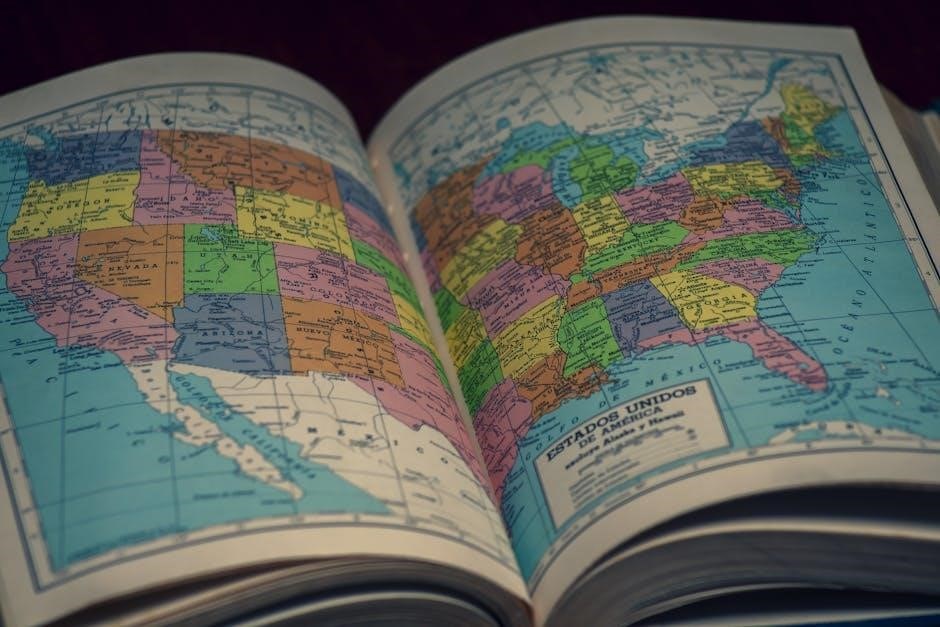
Ways of the World distinguishes itself through its explicit commitment to a genuinely global historical perspective, moving beyond Eurocentric narratives. The textbook PDF presents a broad panorama of human history, encompassing diverse regions and civilizations – from Asia, Africa, and the Americas to Europe and Oceania.
It intentionally avoids framing history as a linear progression of Western dominance, instead emphasizing the interactions and exchanges between different cultures. This approach allows students to appreciate the unique contributions of various societies and understand the complexities of global interconnectedness.
The textbook actively compares and contrasts historical developments across different parts of the world, revealing both similarities and differences. By examining global patterns, it fosters a more nuanced and comprehensive understanding of the past.
Accessing the PDF version facilitates a deeper engagement with this global scope, allowing for focused study of specific regions and themes.
Coverage of Different Time Periods
The “Ways of the World” textbook PDF provides a comprehensive survey of world history, spanning from the earliest human societies to the present day. It’s structured to cover major historical periods, offering detailed insights into foundational eras like the Paleolithic, Neolithic, and the rise of early civilizations.
Subsequent chapters delve into classical empires – such as Rome, Greece, and Han China – and explore the development of major world religions. The PDF format allows students to easily navigate between these distinct periods, facilitating comparative analysis.
The text also dedicates significant attention to the medieval period, the age of exploration, and the rise of modern nation-states. It culminates in an examination of the 20th and 21st centuries, addressing globalization, technological advancements, and contemporary challenges.
This broad chronological scope, readily accessible within the textbook’s PDF, equips students with a robust understanding of historical continuity and change.

Using the PDF Effectively
Ways of the World’s PDF version offers convenient navigation, search capabilities, and device compatibility for enhanced studying and research experiences.
Navigation and Search Features
The PDF format of “Ways of the World” unlocks powerful navigation and search features crucial for efficient study. Most PDF readers, like Adobe Acrobat or built-in browser viewers, include a table of contents allowing quick jumps to specific chapters and sections.
Furthermore, the integrated search function enables users to locate keywords, phrases, or specific historical figures within the entire text instantly. This is particularly useful when researching specific topics or reviewing material for exams.
Hyperlinks within the PDF, if present in the specific version, can connect to external resources or further reading materials, enriching the learning experience. Bookmarking key pages is also a valuable feature, allowing for easy return to important sections during study sessions. Utilizing these tools maximizes the PDF’s potential as a dynamic and accessible learning resource.
Effective use of these features transforms the textbook from a static document into an interactive study aid.
Compatibility with Devices
A significant advantage of the “Ways of the World” PDF is its broad compatibility across a wide range of devices. It can be readily accessed on laptops, desktops, tablets (like iPads and Android tablets), and smartphones.
This cross-platform accessibility allows students to study anytime, anywhere, without being tethered to a physical copy of the textbook. Most devices have pre-installed PDF viewers, or free viewers can be easily downloaded.
However, file size can be a consideration; larger PDFs may take longer to download and can consume more storage space on mobile devices. Cloud storage solutions, like Google Drive or Dropbox, offer a convenient way to store and access the PDF across multiple devices without filling up local storage.
Optimized PDF readers often offer features like zoom and reflow text, enhancing readability on smaller screens, ensuring a consistent learning experience regardless of the device used.
PDF Annotation Tools
The “Ways of the World” PDF becomes even more valuable when utilized with PDF annotation tools. These tools allow students to actively engage with the material by highlighting key passages, adding notes, and underlining important concepts directly within the document.
Popular options include Adobe Acrobat Reader (free version offers basic annotation), Xodo, and Foxit Reader. These programs enable users to insert text boxes, draw shapes, and even add sticky notes for quick reminders or further research.
Such interactive features transform the PDF from a static text into a dynamic study aid, promoting deeper understanding and retention. Annotations are particularly useful for preparing for exams or writing essays, as they consolidate important information in one place.
Furthermore, many annotation tools allow for exporting annotated PDFs, facilitating collaboration with classmates or sharing notes with instructors.
“Ways of the World” and Academic Use
Ways of the World, often assigned as course material, provides a comprehensive historical narrative. The PDF version facilitates convenient study and research for academic purposes.
Textbook as a Course Material
Ways of the World frequently serves as a core textbook in various history courses, particularly those focusing on world history, global civilizations, or introductory historical studies at the college and university levels.
Its broad scope and thematic approach make it suitable for survey courses aiming to provide students with a foundational understanding of global historical processes.
Instructors often utilize the PDF version for easy distribution of readings, in-class activities, and online assignments, enhancing accessibility for students.
The textbook’s structure allows for flexible syllabus design, enabling educators to emphasize specific regions, time periods, or themes based on course objectives.
Furthermore, the availability of the PDF format supports blended learning environments, integrating traditional classroom instruction with digital resources.
Many professors also appreciate the accompanying source materials, fostering critical thinking and analytical skills among students as they engage with primary documents.
The digital format also allows for easy annotation and highlighting, aiding in focused study and note-taking.
Supplemental Resources
Alongside the Ways of the World textbook – whether in print or PDF format – a wealth of supplemental resources enhances the learning experience and supports deeper engagement with the material.
These often include online study guides, practice quizzes, and interactive maps designed to reinforce key concepts and timelines.
Instructors frequently curate additional primary source documents, scholarly articles, and multimedia content to complement the textbook’s narrative.
Websites dedicated to world history, such as those offered by universities and museums, provide valuable context and diverse perspectives.
Accessing the PDF version facilitates seamless integration of these external resources, allowing students to easily cross-reference information and conduct further research.
Online forums and discussion boards also serve as valuable platforms for collaborative learning and peer-to-peer support.

Furthermore, digital archives and libraries offer a vast collection of historical materials, enriching the study process beyond the textbook’s scope.